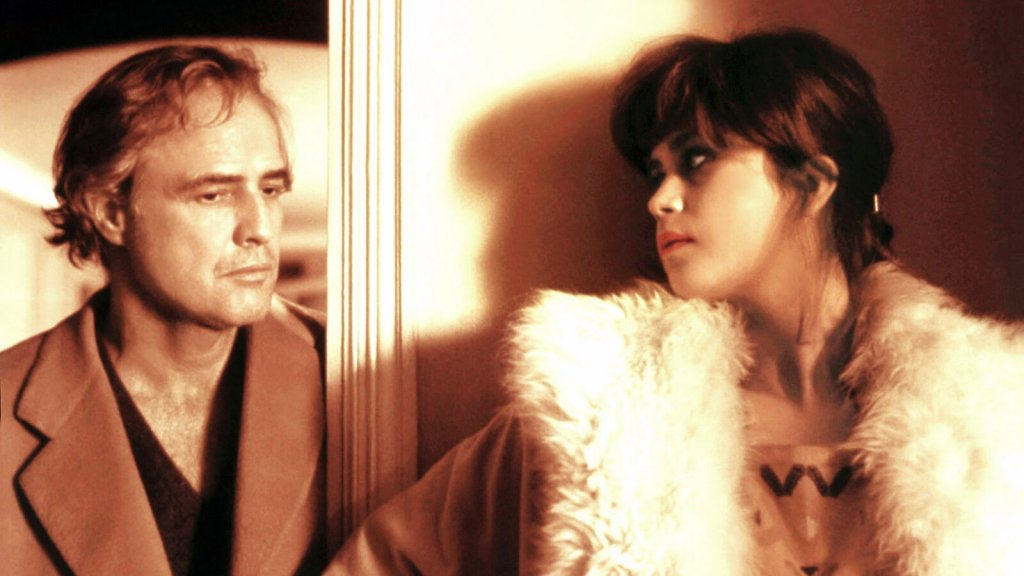
Last Tango in Paris: The Socio-Psychological Make-up of Paul
Bernardo Bertolucci’s Last Tango In Paris offers a raw image of the complexity of human nature. Specifically, Bertolucci’s incorporation of the Francis Bacon portraits Portrait of Lucien Frued and Portrait of a Woman help elucidate the raw and complex nature of the film’s central characters Paul (Marlon Brando) and Jeanne (Maria Schnieder).The portraits suggest that Paul and Jeanne have layered backgrounds, which they do not discover about each other until nearly the end. Paul’s complexity as a character is depicted primarily in his body language, dialogue, and his past. All of these factors contribute to Paul’s socio-psychological make-up and are highlighted among the mise-en-scene and recurring motifs in the film.
From the mise-en-scene in the beginning of the film, it is evident that Paul is on a different path than many of the other characters. This is supported by the way Paul is positioned below the train platform in the opening scene with a tired posture and a forlorn expression. Jeanne walks directly past him in a hurry, and shortly after there is a close up shot of her on another flight of stairs with him faded in the background. This suggests a contrast of the two characters and their stages in life. Jeanne is a young 20 year old on the verge of starting a new chapter in life and considering marriage, while Paul is a 45 year old man dealing with the end of a chapter in his married life. This can also suggest that the youth (Jeanne) is a direct foil to the older generation (Paul).
Similarly, the motif of isolation is evident in the scene where Paul looks out the window and sees a couple in an apartment across the street. He sees a woman sewing a man’s pants directly below the belt, and she cuts the thread with her mouth when she is done sewing. The way she cuts the thread suggests that they are a couple, and the fact that she sewed his pants in that region while he was still wearing them suggests that they have a strong amount of trust. As Paul is witnessing these events unfold, he is framed alone within the window frame, next to the stained glass window of the bathroom where is wife had committed suicide. In this moment, he realizes that he did not have a true understanding of who his wife was. Therefore, this scene contributes to the recurring motif of isolation, as highlighted by the mise-en-scene.
Moreover, the scene where Paul visits his dead wife contributes to the recurring motif of isolation, and reflects the socio-psychological makeup of his character through body language and dialogue. When Paul visits her, he is framed alone within a dim lit box of the room. Despite the upsetting circumstance of this environment, Paul slouches relaxed in the chair next to her, and shouts obscene, disparaging remarks at his wife such as,
“Our marriage was nothing more than a foxhole for you. And all it took for you to get out was a 35-cent razor and a tub full of water. You cheap godforsaken whore, I hope you rot in hell. You’re worse than the dirtiest street pig anybody could ever find anywhere, and you know why? You know why? Because you lied. You lied to me and I trusted you”.
This dialogue shows that no matter the circumstance, Paul speaks his mind. It further suggests that the traumatic event of his wife’s death had an immense impact on his view of marriage, which now has a negative connotation, and explains why he does not wish to form an attachment to Jeanne. The lighting of the room in which this scene unfolds is relevant to the motif of isolation, which quite literally depicts Paul being left in the dark without true closure from his wife.
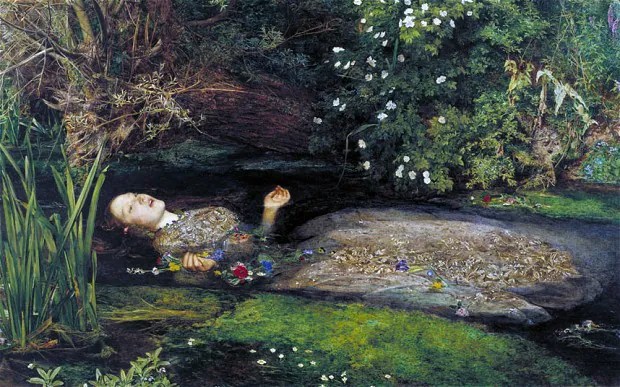
In the same manner, the way his wife is laid out among an oval of flowers can be seen as a reference to Shakespeare’s Ophelia, who suggestively died of suicide/drowning in Hamlet. There is a famous painting which depicts Ophelia in the Tate Museum in London, also where Bertolucci gathered inspiration from the works of Bacon. The painting depicts a woman floating in water surrounded by flowers, which is similar to the manner in which Paul’s wife died and how she is presented after her death. This reference proposes that Paul’s relationship to his wife can be comparable to that of Ophelia and Hamlet. The relationship between Ophelia and Hamlet is complicated since her father did not approve of him. Further, Hamlet can be described as a character who is not in a proper mental state to be in a relationship, as shown through his philosophical dialogue on whether he should continue to live (to be or not to be). This certainly has parallels to Paul’s wife, who’s mother did not approve of him, and the outbursts Paul has as a reaction to the realization that he did not truly know his wife. It is known that Paul and his wife’s mother had disagreements, as depicted in the argument they have about religion. Paul wanted a secular funeral for his wife despite her mother’s desire for a funeral by the church.
RECAP: Many of the components which create Paul’s character are highlighted through the motif of isolation and the mise-en-scene. These components include Paul’s body language, dialogue, and background. Even in dark moments, he appears relaxed and continues to indulge in obscene language, which is reflective of the person he has become as a result of his past experiences. The references that Bertolucci incorporates, including the Francis Bacon portraits Portrait of Lucien Freud,Portrait of a Woman and the John Everett Millais portrait Ophelia aid the composition of Paul’s raw, complex nature. Ultimately, all of these elements explain how his past led to the person he would become, and inevitably lead to his downfall.
 About
About 
Leave a comment