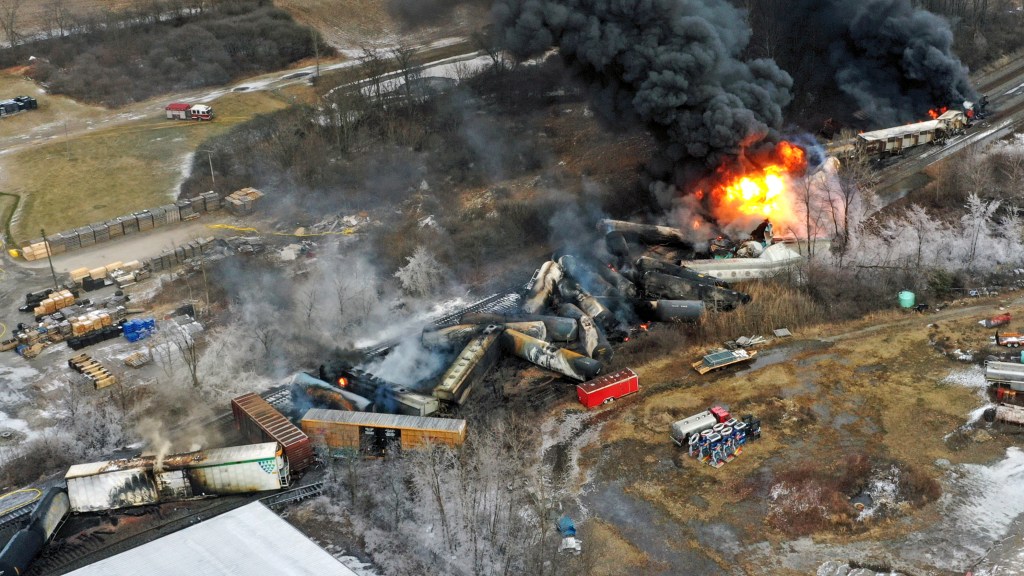
In the beginning of February, a train carrying toxic chemicals derailed in eastern Ohio resulting in a fire and smoke that would consume the town of East Palestine. Not only did the drainage of these chemicals result in the death and illness of thousands of fish and livestock, but also exposed locals to carcinogens which could result in various illnesses including liver cancer. Further, residents of other states such as Pennsylvania may have to expect pollutants and water contaminants from the accident. This has been a rising issue which many social media users, including celebrities, have felt the need to speak on. In environmental events as imminent as this, social media certainly serves as a marketplace of ideas for both professionals and concerned civilians.
What is “the marketplace of ideas”?
Before delving into the tragic environmental event in Ohio, it is necessary to discuss where people are able to express concerns. Mainly, this issue has been discussed on social platforms such as Tik Tok and Instagram, where East Palestine locals and others were able shed light on their first hand experiences or voice their concerns. In one Tik Tok video, a local living in East Palestine went to make their morning coffee and noticed the water from her sink was sizzling immediately after pouring milk into her cup. They explained that this was a result of the recent chemical exposure, and urged millions of viewers in the area to only drink bottled water. In the article “Marketplace of Ideas”, David Schultz asserts the concept as an economic analogy. In the economic marketplace, “superior products sell better than others…the marketplace of ideas uses competition to judge truth and acceptability”. In this case, some people are able to convince multitudes that their views on the environmental impact of this event are “better” than those held by others on social platforms. This woman’s story involving an unusual occurrence making her morning coffee certainly allowed others on Tik Tok to see what she is experiencing first hand. This can be beneficial if used correctly, or negative if the proposed ideas contain harmful and inaccurate information.
One source that covered the depth of this event was The New York Times. As a generally reputable source, this is one of the main outlets I personally look into for more information on claims made by environmental experts and politicians. In the article “After the Ohio Train Derailment: Evacuations, Toxic Chemicals and Water Worries”, Christine Hauser states,
“In the first such proposal to emerge in Congress since the derailment, two House Democrats, Representatives Chris Deluzio of Pennsylvania and Ro Khanna of California, introduced a bill on Feb. 28 to tighten federal regulation of trains carrying hazardous materials by broadening the definition of what is considered ‘high-hazard flammable train’”.
Through this statement, Hauser elucidates how representatives plan to handle this matter if it were to recur in the future. Hauser further notes that the bill will protect families, who for generations, have depended on raising livestock and working the soil to ensure their livelihood.
What are people saying about the matter on social media?
Both celebrities and civilians have been sharing their thoughts on this recent environmental tragedy. In one Instagram post, celebrity and environmental activist Leonardo Dicaprio claims, “The toxic chemical release in East Palestine, Ohio could be the largest environmental disaster in U.S. history”. The actor and activist captioned this after posting an Impact News article discussing connected networks of streams running from Ohio throughout the rest of the United States, and other effects of the carcinogens released from the chemical exposure. Dicaprio, having a large and committed fan base, certainly struck up conversation on the platform. Followers in the comments provided their own experience on railroad working conditions, concerns with the issue’s lack of media coverage, and concerns regarding politicians’ reliability/accountability. Ultimately, being exposed to a wide array of experiences and beliefs held by others will ideally allow the public to perform their own research and become informed on current issues. Those in power who use their voice for the benefit of a cause or to raise awareness on an imminent crisis should continue to inspire the public to make fact based decisions, and inspire them to conduct their own research.
References
- Hauser, Christine. “After the Ohio Train Derailment: Evacuations, Toxic Chemicals and Water Worries.” The New York Times, The New York Times, 13 Feb. 2023, https://www.nytimes.com/article/ohio-train-derailment.html#:~:text=On%20Feb.%203%2C%20a%20train,some%20of%20the%20train%20cars .
- Schultz, David. “Marketplace of Ideas.” Marketplace of Ideas, https://www.mtsu.edu/first-amendment/article/999/marketplace-of-ideas .
https://www.nytimes.com/article/ohio-train-derailment.html#:~:text=On%20Feb.%203%2C%20a%20train,some%20of%20the%20train%20cars. https://www.mtsu.edu/first-amendment/article/999/marketplace-of-ideas
 About
About 
Leave a comment