****Spoilers Ahead******
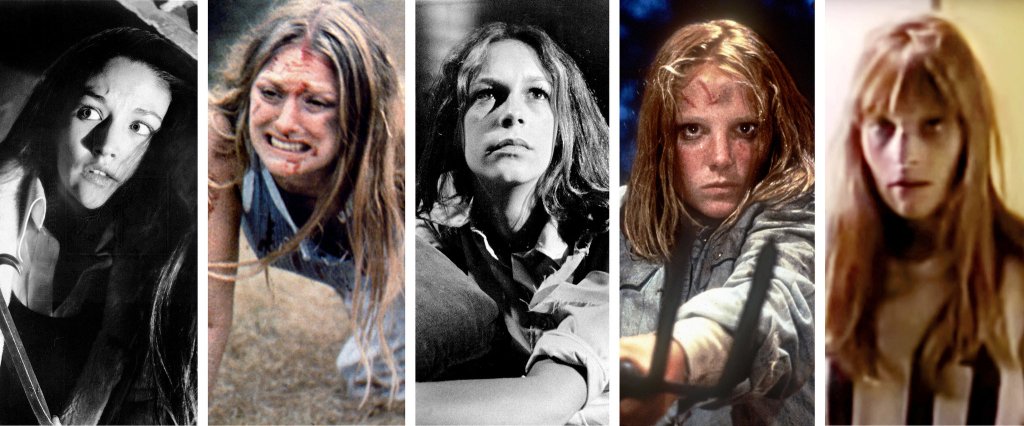
The term “final girl” was coined by Carol Clover in her 1992 book Men, Women, and ChainSaws: Gender in the Modern Horror Film. Traditionally, the final girl is offered in horror cinema as the embodiment of what a woman “should be”, following conservative, puritanical morals. In doing so, she is able to rise against the villain to save herself in opposition to her peers who are tormented for demonstrating sexual agency or other “sinful” activity. Hollywood may have gotten away with these depictions for the majority of the 20th century, but the next generation of female leads will continue to fight back against this narrative and emerge unscathed.
Moving into the second half of the 20th century, politics and social commentary became a driving discussion across the horror genre. While many of these films offer a refreshing take, women of the genre still could not seem to win in the end. One of the earliest films that addresses socio-political commentary on womanhood is Roman Polanski’s 1968 film Rosemary’s Baby. In the book New Blood in Contemporary Cinema: Women Directors and the Poetics of Horror Patricia Pisters notes,
“Other horror films refer to the monstrosity of the womb belonging to a woman who gives birth to some kind of terrifying creature. Some of the most famous male-directed horror films address the archaic or parthenogenetic mother who has the power of reproduction beyond male control…other horror fantasies pertaining to pregnancy explore the idea of impregnation by the devil or other demon entities, most famously rendered in Rosemary’s Baby” (Pisters 2020).
This offers a poignant view on motherhood, suggesting that the role is a societal expectation which women are pressured to fulfill. To guide this point, Pisters connects the archaic concept of motherhood in Rosemary’s Baby to literature of the early 20th century, including Virginia Woolf’s 1927 novel To the Lighthouse. This novel discusses different paths for women such as motherhood or careers, psychology, and the power imbalances between men and women. Rosemary (Mia Farrow) initially showcases the power dynamics in her relationship when she expresses her hesitancy to move to New York for her husband’s new acting job. It seems to be a choice she was expected to go along with rather than one she would have wanted. In this film’s extreme scenario of power imbalances, Rosemary’s actor husband Guy (John Cassavetes) will do anything to achieve fame, including selling his wife’s body to the devil as well as their first born child. Additionally, Pisters asserts, “Following Woolf and the first wave of feminists, the feminists of the second wave had even more explicit points of view and mixed feelings about childbearing and motherhood” (Pisters 2020). This is highlighted in the film, as Mia Farrow is robbed of her autonomy and choice to become a mother. While this film strays away from the final girl trope with timely social commentary, it still portrays an antiquated image of how women are expected to behave in the home and society in general.
One film which highlights socio-political commentary in horror cinema and stays true to the final girl trope is Bob Clark’s 1974 sorority slasher Black Christmas. While this film focuses on the brutal killings of promiscuous sorority girls, there is one girl who is provided with an entire subplot. Jess’s (Olivia Hussey) subplot consists of her finding out she is pregnant among her sorority sisters’ disappearances. She discusses her concerns about the pregnancy conflicting with her education and career with her boyfriend Peter (Albert Dunk), and expresses her decision to get an abortion. This choice for her character is significantly relevant during the era, since Roe v. Wade was included in the United States Constitution a year prior to this film’s release. Clark makes this tension prominent and unnerving by framing her reluctant boyfriend out of focus behind her while she discusses this option with him. While Jess is arguably the most logical and responsible of her friends, this decision would affect her survival since the killer would deem it a “sin”.
Another woman who is targeted includes Clare Harrison (Lynne Griffin), the film’s initial victim. In her room, we discover drug paraphernalia and Woodstock posters of nude hippies, which can arguably be found in any standard college room across the country. Unfortunately when Clare’s father discovers this, he says “I didn’t send my daughter here to be drinking and picking up boys” (Clark, Black Christmas). After he leaves, the sorority mother Mrs. Mac (Marian Waldman) mutters that she does not know how he expects her to keep the girls in line and whispers, “These broads would hump the Leaning Tower of Pisa if they could get up there!” (Clark, Black Christmas). Mrs. Mac establishes a sin factor, not only for Clare, but for other members of the sorority as well. This eliminates the possibility of survival in the traditional horror film. Further, this would ultimately explain their demise as they stray from conservative morals. Another victim, Barb (Margot Kidder), is also tortured for demonstrating promiscuity, using crude humor, and consistently smoking and drinking. Jess is the film’s final girl since she is not depicted engaging in any of this behavior with the exception of her decision to get an abortion. Sadly, the final shot of the killer’s eyes framed within a closet door suggest that she is not entirely safe, thus perpetuating the demonization of women for displaying sexual agency in film.
Moving into the later end of the 20th century, horror cinema began to offer self awareness of the tropes, commenting on their previous tendencies to negatively depict women’s autonomy. The main film that brought forth these views is Wes Craven’s 1996 slasher Scream. The film incorporates the classic final girl trope, however, its victims and killers are now aware of the rules. They actively reference and develop rules from films like Halloween (1978), Prom Night (1980), and When a Stranger Calls (1979). As one member of the tormented group, horror fanatic Randy Meeks (Jamie Kennedy) notes,
“There are certain RULES that one must abide by in order to successfully survive a horror movie. For instance, number one: you can never have sex. BIG NO NO! Sex equals death, okay? Number two: you can never drink or do drugs. The sin factor! It’s a sin. It’s an extension of number one. And number three: never under any circumstances say, “I’ll be right back.” Because you won’t be back” (Craven, Scream).
According to Randy, breaking from these values rooted in religion is deemed “sinful”, and will result in the impending death of members in the group. Scream’s killers call out these rules before slaying their victims, using them as a guide for the horrors they commit. However, the film’s final girl, Sidney Prescott (Neve Campbell), sleeps with her boyfriend while calling out the sexism in horror and is still able to fight back and survive.
In lending Sidney’s awareness of the archaic portrayal of women in horror, Craven rewrites the narrative for survival, altering the concept of who the final girl can be. As Sidney’s character tells the killer early in the film, she’s had it with sexism in horror movies.
“They’re all the same,” she shares. “Some stupid killer stalking some big-breasted girl who can’t act who is always running up the stairs when she should be running out the front door? It’s insulting” (Wes Craven, Scream).
Through this discussion of Sidney’s horror culture awareness, she is able to bend the rules because of her intelligence. Since her character continues to fight back, she becomes stronger in each film of the franchise as the tropes develop. She knows the rules the killers follow, accurately guessing their next move. In contrast, members of her original friend group choose to ignore them, and are punished for their lack of knowledge on slashers. Overall, this is perhaps the first time in horror cinema that awareness of the tropes is demonstrated by female characters, and Sidney still lives in the franchise nearly three decades later.
When looking at horror cinema the 21st century has to offer, many provide social commentary while abandoning the concept of the final girl or other archaic depictions altogether. Examples include Robert Mitchell’s 2014 film It Follows, Robert Eggers’ The Witch (2015), and Ari Aster’s Midsommar (2019). Robert Mitchell’s 2014 film It Follows provides themes on safe sex and consent without driving the fears surrounding those issues. The film’s female lead Jay (Maika Monroe) is haunted by an unknown entity after she has sex with her new boyfriend Hugh (Jake Weary). Hugh explains to her that he was followed by this entity after he had sex with a different woman, and that in order for Jay to get rid of it, she must have sex with someone else. While Jay attempts to get rid of this entity, she is not demonized by her friends, but rather accepted by them through open conversation. With their support, Jay is able to survive. In this film, the woman is not portrayed as the victim, but rather a strong protagonist who survives the horrors inflicted on her.
Similarly, Robert Eggers’ The Witch (2015), and Ari Aster’s Midsommar (2019) succeed in depicting strong female protagonists while abandoning traditional conventions. Both female protagonists in The Witch and Midsommar are depicted as being held down by patriarchal elements like the father and boyfriend figure, yet emerge by taking control of their lives and bodies. In The Witch, Thomasin (Anya Taylor Joy) actively rejects Puritan ideals, recognizes her sexuality, and ultimately uses her position to subvert the roles that have been imposed on her. In a similar manner, Dani (Florence Pugh) escapes a toxic relationship in Midsommar, and reclaims autonomy in a matriarchal cult. Overall, both characters emerge from the traumas inflicted on them, and move in a direction of their own choosing.
When comparing horror cinema of the late 1960s-1970s to more recent films, it is evident that conventional tropes like the final girl are evolving or are being eliminated completely. Although this type of cinema previously provided undertones of socio-political commentary on women’s issues, they are now becoming stronger or driving the focus for many films of the genre today. With filmmakers like Mitchell, Eggers, and Aster the landscape for horror is gradually changing. Films of the genre are no longer limited to groups being killed off one by one or characters being demonized for drug use or sexual promiscuity. Instead, female characters are reclaiming agency without being tokenized as the virgin, mother figure, or final girl. Ultimately, they are carving their own niche, moving toward more empowering depictions on screen.
Sources
Clark , Bob, director. Black Christmas. Warner Bros., 1974.
Clover, Carol J. “Men, Women, and ChainSaws: Gender in the Modern Horror Film.” JSTOR, Princeton University Press, 1992, www.jstor.org/stable/j.ctvc7776m
Craven, Wes, director. Scream. Dimension Films, 1996.
Dray, Kayleigh. “How Scream Has Been Killing Off Sexist Horror Tropes for 25 Years.” Stylist.Co.Uk, Stylist, 2021, www.stylist.co.uk/life/scream-horror-movies-sexism-feminism-neve-campbell-courteney-cox/412951 .
Pisters, Patricia. “New Blood in Contemporary Cinema: Women Directors and the Poetics of Horror.” JSTOR, Edinburgh University Press, www.jstor.org/stable/10.3366/j.ctv177thfv . Accessed 22 Oct. 2023.
 About
About 
Leave a comment